Launched and reached orbit.
Northrop Grumman Space Systems / MISSION BRIEFING
Swift Boost Mission
Pegasus XL · Mission Extension
Success
LAUNCH TIMEMISSION COMPLETETiming is subject to mission updates
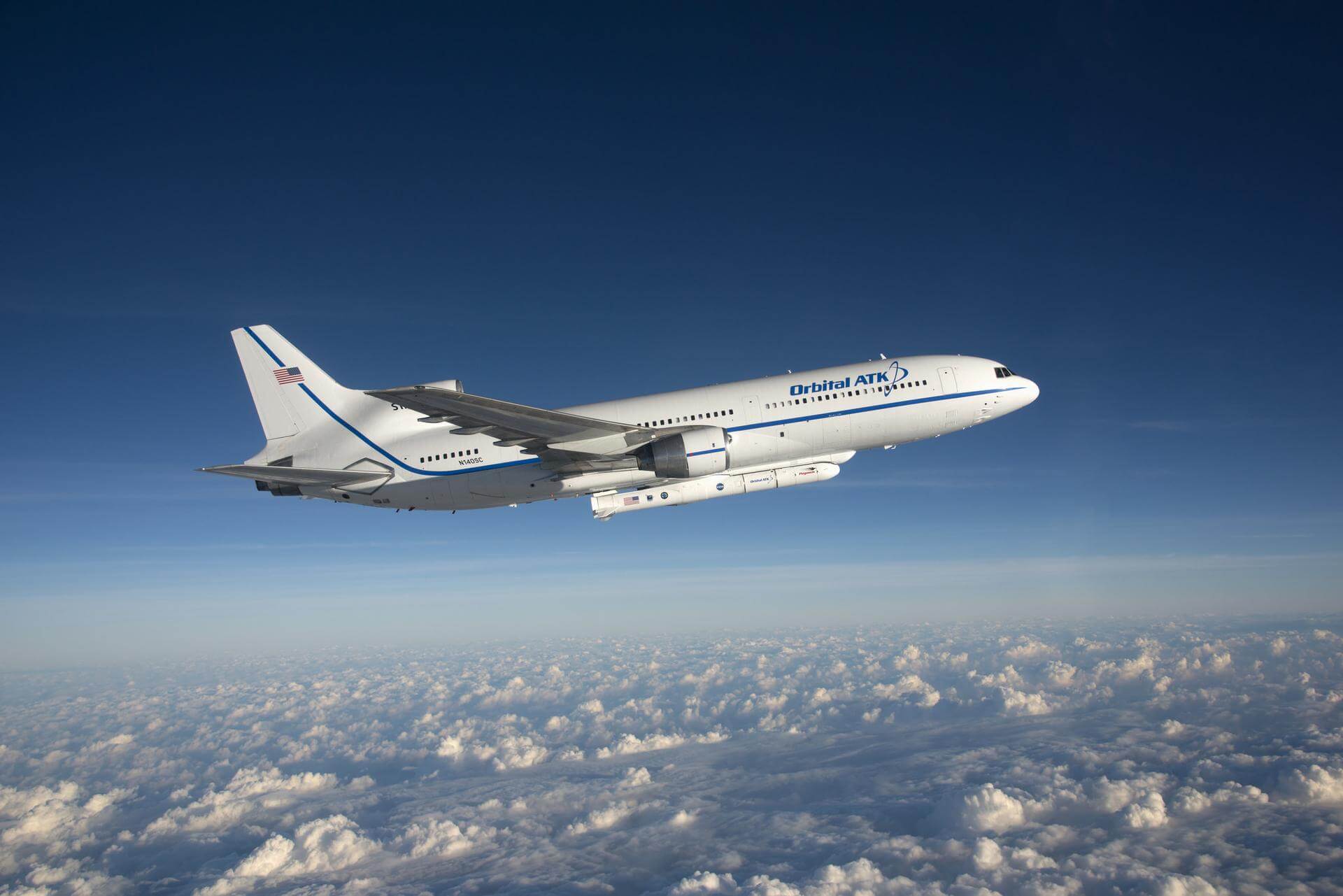
Mission image · NASA/Laurie Losey

Mission overview
Contracted by NASA under the Small Business Innovation Research Phase 3 contract, Katalyst Space Technologies' LINK servicing spacecraft will rendezvous and attach to NASA’s Neil Gehrels Swift Observatory to re-boost its orbit. This aims to demonstrate a key capability for the future of space exploration and extending the Swift mission’s science lifetime in gamma ray astronomy.
- Mission
- Swift Boost Mission
- Mission type
- Mission Extension
- Provider
- Northrop Grumman Space Systems
- Target orbit
- Low Earth Orbit
Timeline
Scheduled event sequence from Launch Library 2. These are planned milestones, not confirmed telemetry. Events remain unconfirmed until a verified source reports them.
Liftoff
08:36 UTCFirst upwards movement of the rocket
SCHEDULED
Ignition
08:36 UTCStart of the engine ignition sequence
SCHEDULED
MECO
08:37 UTCCut-off of the main engine
SCHEDULED
SES
08:37 UTCStart of the second engine
SCHEDULED
Fairing Separation
08:38 UTCSeparation of the payload fairing
SCHEDULED
SECO
08:38 UTCCut-off of the second engine
SCHEDULED
Stage 3 Ignition
08:42 UTCThird stage engine ignites.
SCHEDULED
Stage 3 Cutoff
08:43 UTCThird stage engine shuts down.
SCHEDULED
Payload Separation
08:48 UTCFinal deployment of the payload from the rocket
SCHEDULED
Mission intelligence
Explore connectionsMission activity
Listening for verified changes
Activity appears when ORBITAL observes a change between source records. No historical events are invented.
Read source update
Rescheduled for July 3.
Scrub due to launch vehicle issue.
Delayed again due to weather
Scrubbed due to weather
Adjusted T-0.
Refined T-0.
Delayed to NET June 30 per new marine navigation warnings.
GO for launch.
NET June 27 per NOTAMs, TBC.
NET June.
NET June 1st.
Added launch.
Schedule history
No changes recorded
Changes are recorded when ORBITAL retrieves data. The detection time may differ from the time the source changed its information.
Rocket
Pegasus XLOrbital Sciences Corporation · United StatesThe Pegasus is an air-launched rocket developed by Orbital Sciences Corporation (now part of Northrop Grumman Innovation Systems). Capable of carrying small payloads of up to 443 kilograms (977 lb) into low Earth orbit, the vehicle consists of three solid propellant stages and an optional monopropellant fourth stage. Pegasus is released from its carrier aircraft at approximately 40,000 ft (12,000 m), and its first stage has a wing and a tail to provide lift and attitude control while in the atmosphere.
Payload
LINK
Spacecraft designed, built and operated by Katalyst Space as part of the Swift rescue mission
Target orbit
SCHEMATIC · NOT A FLIGHT TRAJECTORY
- Orbit
- Low Earth Orbit
- Classification
- LEO
Launch site
Kwajalein Atoll
Air launch to orbit
- Latitude
- 8.71667°
- Longitude
- 167.73333°
- Country
- Marshall Islands
- Time zone
- UTC
Live & mission coverage
No verified official livestream has been announced. Check mission sources for coverage updates.
Sources
Source links and confidence are preserved with each mission. Official updates take priority when verified.
Launch Library 2high · P80
ll.thespacedevs.com · Updated Jul 3, 2026 23:47 UTCOfficial mission updatehigh · P100
science.nasa.gov · Updated Jul 3, 2026 23:47 UTCMission referencemedium · P60
x.com · Updated Jul 3, 2026 23:47 UTCOfficial mission updatehigh · P100
science.nasa.gov · Updated Jul 3, 2026 23:47 UTCOfficial mission updatehigh · P100
science.nasa.gov · Updated Jul 3, 2026 23:47 UTCOfficial mission updatehigh · P100
science.nasa.gov · Updated Jul 3, 2026 23:47 UTCMission referencemedium · P60
x.com · Updated Jul 3, 2026 23:47 UTCOfficial mission updatehigh · P100
science.nasa.gov · Updated Jul 3, 2026 23:47 UTCMission referencemedium · P60
forum.nasaspaceflight.com · Updated Jul 3, 2026 23:47 UTCMission photographs are provided by the original sources. Their rights remain with their creators; consult the source before reusing an image.