Launch success.
Korea Aerospace Research Institute / MISSION BRIEFING
NeonSat-2 to 6
KSLV-2 Nuri · Earth Science
Success
LAUNCH TIMEMISSION COMPLETETiming is subject to mission updates
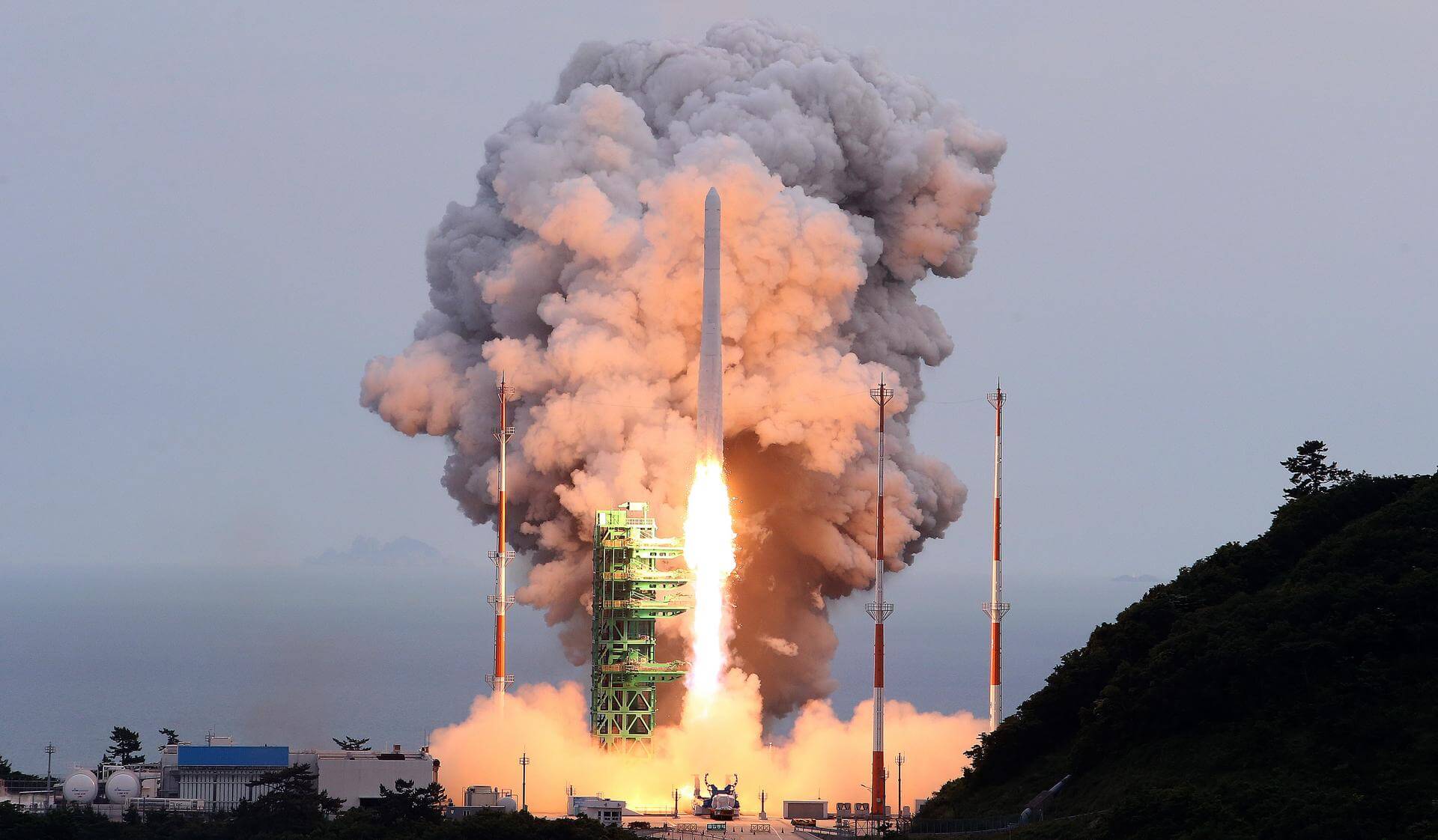
Mission image · KARI/VNA/CVN
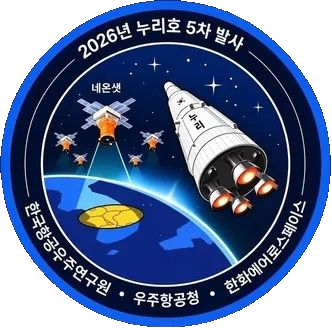
Mission overview
NeonSat-2 to 6 are part of the South Korean government's Earth observation micro-satellite constellation NeonSat (New-space Earth Observation Satellite). The NeonSat constellation is the first satellite system developed by the government using a mass-production approach for precise monitoring of the Korean Peninsula. 10 ride-sharing small satellites from various Korean institutes and organizations will also fly on this launch: * SLEDGE * GBSAT * PERSAT02 * UEL-Y-Sys * SD-1 SAT * E3_TESTER-KARI-2 * DaejonSat-1 * BEE-1012 * JACK-007 * CPSat
- Mission
- NeonSat-2 to 6
- Mission type
- Earth Science
- Target orbit
- Sun-Synchronous Orbit
Timeline
Scheduled event sequence from Launch Library 2. These are planned milestones, not confirmed telemetry. Events remain unconfirmed until a verified source reports them.
Liftoff
03:25 UTCFirst upwards movement of the rocket
SCHEDULED
Stage 2 Separation
03:27 UTCSeparation of the second stage from the first
SCHEDULED
Fairing Separation
03:28 UTCSeparation of the payload fairing
SCHEDULED
Stage 3 Separation
03:29 UTCSeparation of the third stage from the second
SCHEDULED
Stage 3 Cutoff
03:37 UTCThird stage engine shuts down.
SCHEDULED
Payload Deployment Sequence Start
03:38 UTCStart of the payload deployment sequence
SCHEDULED
Payload Deployment Sequence End
03:42 UTCEnd of the payload deployment sequence.
SCHEDULED
Mission intelligence
Explore connectionsMission activity
Listening for verified changes
Activity appears when ORBITAL observes a change between source records. No historical events are invented.
Read source update
All payload have separated.
Liftoff.
Official Webcast by 우주항공청 KASA has started
New T-0.
GO for launch on October 7.
Delayed to NET October.
NET September.
NET Q3 2026.
Added launch.
Schedule history
No changes recorded
Changes are recorded when ORBITAL retrieves data. The detection time may differ from the time the source changed its information.
Rocket
KSLV-2 NuriKorea Aerospace Research Institute · South KoreaNuri, also known as KSLV-II, is South Korea's second carrier rocket and the successor to KSLV-1.
Payload
NeonSat-2 to 6
Payload details are described in the mission overview. No independently structured payload manifest or payload mass has been provided by the source.
Target orbit
SCHEMATIC · NOT A FLIGHT TRAJECTORY
- Orbit
- Sun-Synchronous Orbit
- Classification
- SSO
Launch site
LC-2
Naro Space Center, South Korea
- Latitude
- 34.43187°
- Longitude
- 127.53507°
- Country
- South Korea
- Time zone
- Asia/Seoul
Live & mission coverage
Official mission broadcast. Stream availability is controlled by the provider.
Sources
Source links and confidence are preserved with each mission. Official updates take priority when verified.
Launch Library 2high · P80
ll.thespacedevs.com · Updated Oct 9, 2026 01:02 UTCMission referencemedium · P60
x.com · Updated Oct 9, 2026 01:02 UTCMission referencemedium · P60
www.youtube.com · Updated Oct 9, 2026 01:02 UTCMission referencemedium · P60
www.youtube.com · Updated Oct 9, 2026 01:02 UTCMission referencemedium · P60
x.com · Updated Oct 9, 2026 01:02 UTCMission referencemedium · P60
x.com · Updated Oct 9, 2026 01:02 UTCMission referencemedium · P60
v.daum.net · Updated Oct 9, 2026 01:02 UTCMission referencemedium · P60
en.sedaily.com · Updated Oct 9, 2026 01:02 UTCMission referencemedium · P60
www.kasa.go.kr · Updated Oct 9, 2026 01:02 UTCMission photographs are provided by the original sources. Their rights remain with their creators; consult the source before reusing an image.