Launch success.
LandSpace / MISSION BRIEFING
10 satellites
Zhuque-2E Block 2 · Technology
Success
LAUNCH TIMEMISSION COMPLETETiming is subject to mission updates
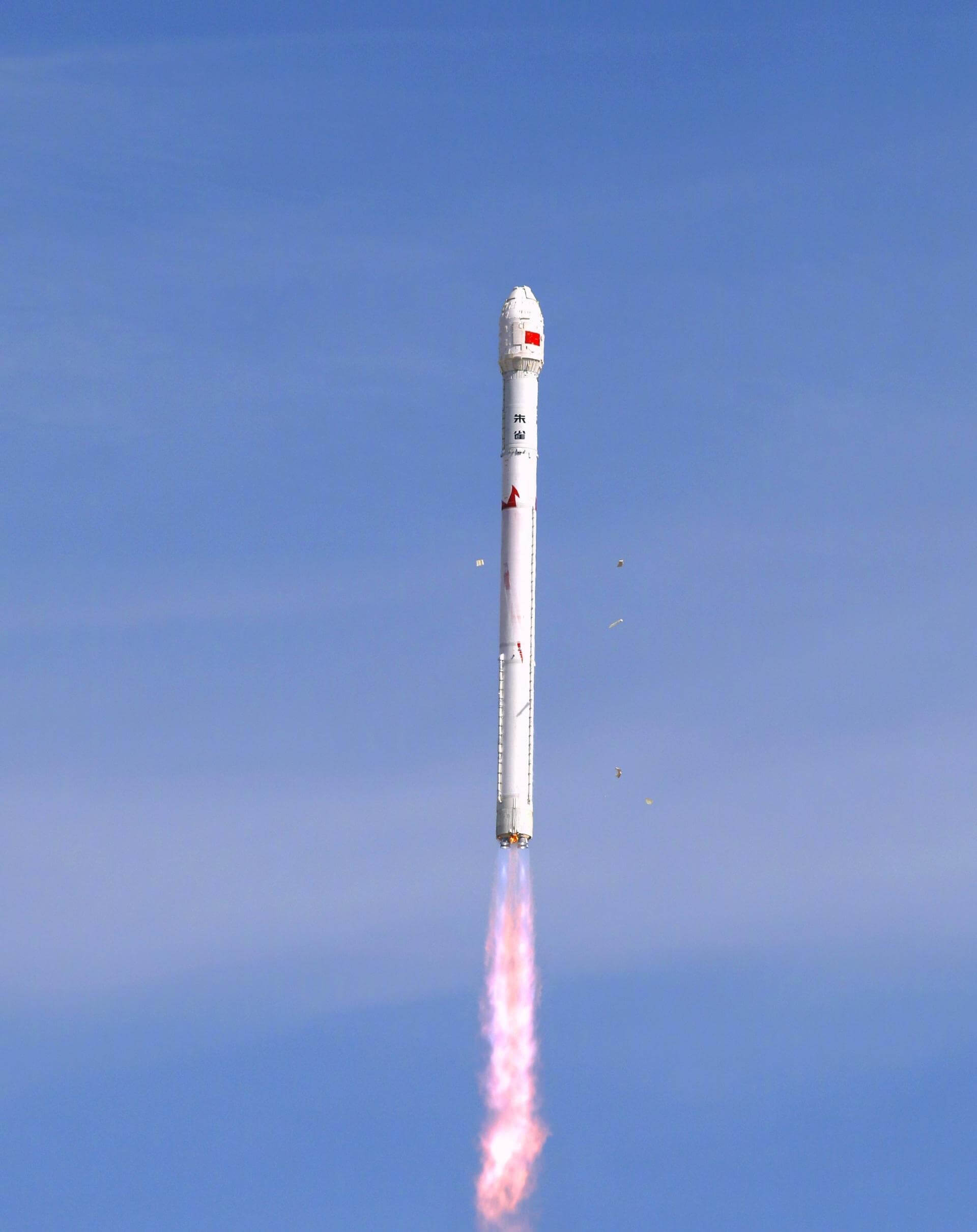
Mission image · LandSpace
Mission overview
Ride-share of 10 satellites to sun-synchronous orbit, including: * Guangchuan-03 & 04 (LT-03/04) from LandSpace's subsidiary LandTower for testing and demonstrating LEO communication satellite constellation technologies, including high-speed laser communication nodes/terminals and new-type solar array power systems. * 8 satellites (XSD-39 and XSD-44 through XSD-50) for ADA Space for technology verification of high-performance on-board computing modules, inter-satellite/satellite-to-ground laser communication, and testing of large radiator wings.
- Mission
- 10 satellites
- Mission type
- Technology
- Provider
- LandSpace
- Target orbit
- Sun-Synchronous Orbit
Timeline
Scheduled event sequence from Launch Library 2. These are planned milestones, not confirmed telemetry. Events remain unconfirmed until a verified source reports them.
A verified event timeline has not been published for this mission.
Mission intelligence
Explore connectionsMission activity
Listening for verified changes
Activity appears when ORBITAL observes a change between source records. No historical events are invented.
Read source update
Added launch per NOTAMs; Payload and launch vehicle identities extremely uncertain.
Schedule history
No changes recorded
Changes are recorded when ORBITAL retrieves data. The detection time may differ from the time the source changed its information.
Rocket
Zhuque-2E Block 2LandSpace · ChinaZhuque-2E (E stands for “enhanced”) is a medium-sized rocket powered by liquid oxygen and methane capable of lifting 6,000 kg of payload into a 200 km low Earth orbit, or 4,000 kg of payload into a 500 km Sun-synchronous orbit. It differs from the baseline Zhuque-2 in using enhanced TQ-12A engines on the 1st stage with higher thrust and specific impulse than the original TQ-12, and a new TQ-15A engine on the 2nd stage that has a moveable nozzle. The Block 2 variant lengthens the 1st stage with more propellant load and a lighter structure, plus engines with still more increased thrust to reach the capabilities listed above.
Payload
10 satellites
Payload details are described in the mission overview. No independently structured payload manifest or payload mass has been provided by the source.
Target orbit
SCHEMATIC · NOT A FLIGHT TRAJECTORY
- Orbit
- Sun-Synchronous Orbit
- Classification
- SSO
Launch site
Launch Area 96A
Jiuquan Satellite Launch Center, People's Republic of China
- Latitude
- 40.91491°
- Longitude
- 100.24549°
- Country
- China
- Time zone
- Asia/Shanghai
Live & mission coverage
No verified official livestream has been announced. Check mission sources for coverage updates.
Sources
Source links and confidence are preserved with each mission. Official updates take priority when verified.
Launch Library 2high · P80
ll.thespacedevs.com · Updated Oct 15, 2026 21:18 UTCMission referencemedium · P60
m.weibo.cn · Updated Oct 15, 2026 21:18 UTCMission referencemedium · P60
forum.nasaspaceflight.com · Updated Oct 15, 2026 21:18 UTCMission photographs are provided by the original sources. Their rights remain with their creators; consult the source before reusing an image.