Launch success.
Russian Space Forces / MISSION BRIEFING
Glonass-K1 No. 20 (?)
Soyuz 2.1b Fregat-M · Navigation
Success
LAUNCH TIMEMISSION COMPLETETiming is subject to mission updates
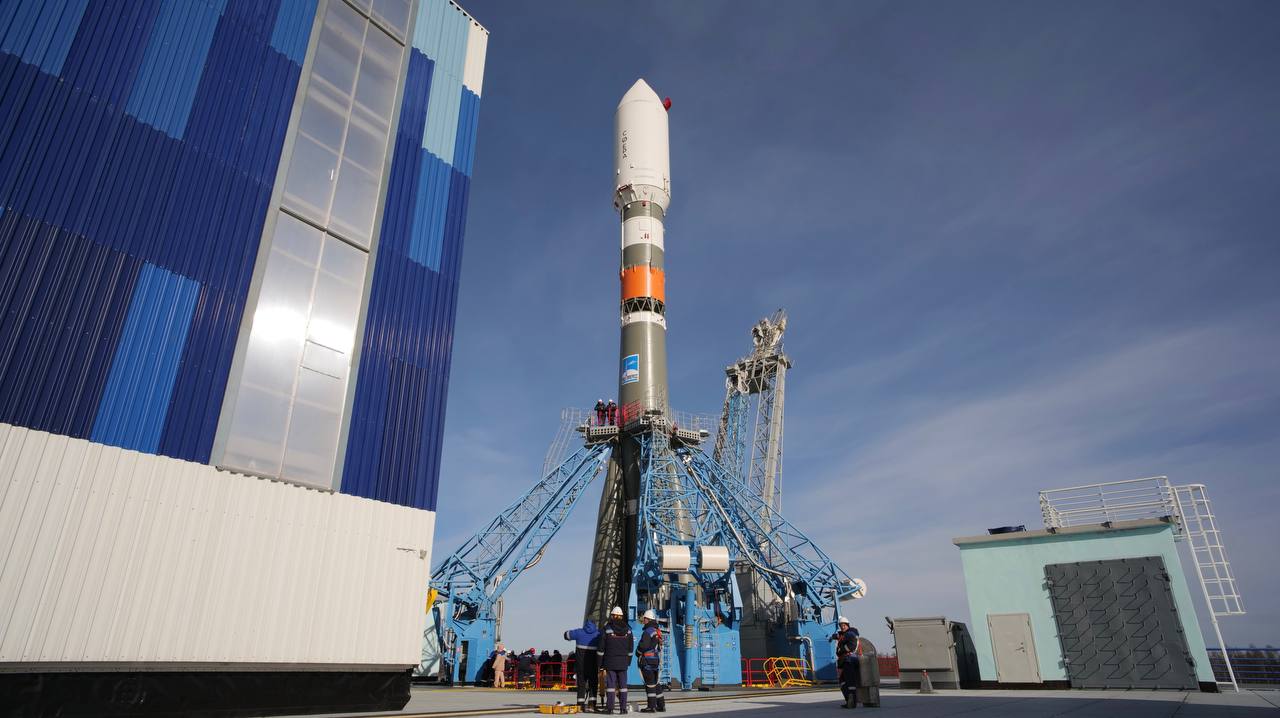
Mission image · Roscosmos
Mission overview
Note: Satellite serial number and Cosmos designation not confirmed. Glonass-K are the third generation of satellite design for GLONASS satellite navigation system. GLONASS is a Russian space-based navigation system comparable to the similar GPS and Galileo systems. This generation improves on accuracy, power consumption and design life. Each satellite is unpressurized and weighs 935 kg, and has an operational lifetime of 10 years.
- Mission
- Glonass-K1 No. 20 (?)
- Mission type
- Navigation
- Provider
- Russian Space Forces
- Target orbit
- Medium Earth Orbit
Timeline
Scheduled event sequence from Launch Library 2. These are planned milestones, not confirmed telemetry. Events remain unconfirmed until a verified source reports them.
A verified event timeline has not been published for this mission.
Mission intelligence
Explore connectionsMission activity
Listening for verified changes
Activity appears when ORBITAL observes a change between source records. No historical events are invented.
Read source update
Updated entry for new launch per NOTAMs scheduled some time between 08:00-20:59 UTC daily, September 17-21; note launch vehicle and payload identities highly uncertain.
Removed from current schedule with cancellation of closure notices.
Added launch per NOTAMs; Launch vehicle and payload identities uncertain; exact launch window TBD.
Schedule history
No changes recorded
Changes are recorded when ORBITAL retrieves data. The detection time may differ from the time the source changed its information.
Rocket
Soyuz 2.1b Fregat-MProgress Rocket Space Center · RussiaSoyuz-2, GRAU index 14A14, is the collective designation for the 21st-century version of the Russian Soyuz rocket. In its basic form, it is a three-stage carrier rocket for placing payloads into low Earth orbit. The first-stage boosters and two core stages feature uprated engines with improved injection systems, compared to the previous versions of the Soyuz. Digital flight control and telemetry systems allow the rocket to be launched from a fixed launch platform, whereas the launch platforms for earlier Soyuz rockets had to be rotated as the rocket could not perform a roll to change its heading in flight.
Payload
Glonass-K1 No. 20 (?)
Payload details are described in the mission overview. No independently structured payload manifest or payload mass has been provided by the source.
Target orbit
SCHEMATIC · NOT A FLIGHT TRAJECTORY
- Orbit
- Medium Earth Orbit
- Classification
- MEO
Launch site
43/3 (43L)
Plesetsk Cosmodrome, Russian Federation
- Latitude
- 62.92730°
- Longitude
- 40.45000°
- Country
- Russia
- Time zone
- Europe/Moscow
Live & mission coverage
No verified official livestream has been announced. Check mission sources for coverage updates.
Sources
Source links and confidence are preserved with each mission. Official updates take priority when verified.
Launch Library 2high · P80
ll.thespacedevs.com · Updated Sep 18, 2026 13:37 UTCMission referencemedium · P60
t.me · Updated Sep 18, 2026 13:37 UTCMission referencemedium · P60
forum.nasaspaceflight.com · Updated Sep 18, 2026 13:37 UTCMission referencemedium · P60
forum.nasaspaceflight.com · Updated Sep 18, 2026 13:37 UTCMission referencemedium · P60
forum.nasaspaceflight.com · Updated Sep 18, 2026 13:37 UTCMission photographs are provided by the original sources. Their rights remain with their creators; consult the source before reusing an image.