Launch success.
United Launch Alliance / MISSION BRIEFING
Amazon Leo (LA-08)
Atlas V 551 · Communications
Success
LAUNCH TIMEMISSION COMPLETETiming is subject to mission updates
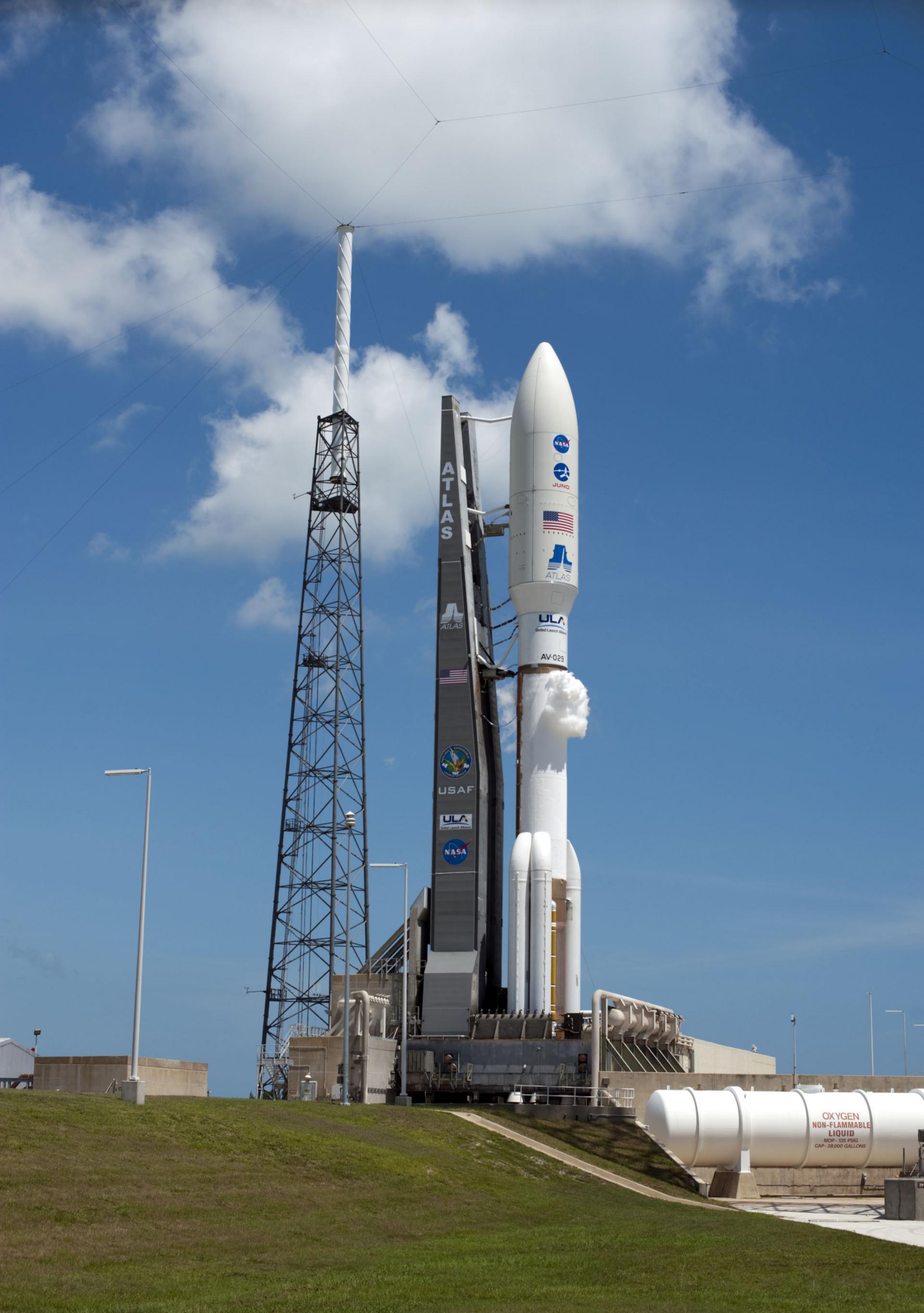
Mission image · https://ll.thespacedevs.com/2.3.0/launches/9eb09815-c237-4fdd-9057-5b161131240c/
Mission overview
Amazon Leo, formerly known as Project Kuiper, is a mega constellation of satellites in Low Earth Orbit that will offer broadband internet access, this constellation will be managed by Kuiper Systems LLC, a subsidiary of Amazon. This constellation is planned to be composed of 3,276 satellites. The satellites are projected to be placed in 98 orbital planes in three orbital layers, one at 590 km, 610 km and 630 km altitude. 29 satellites are carried on this launch.
- Mission
- Amazon Leo (LA-08)
- Mission type
- Communications
- Provider
- United Launch Alliance
- Target orbit
- Low Earth Orbit
Timeline
Scheduled event sequence from Launch Library 2. These are planned milestones, not confirmed telemetry. Events remain unconfirmed until a verified source reports them.
Ignition
04:30 UTCStart of the engine ignition sequence
SCHEDULED
Liftoff
04:30 UTCFirst upwards movement of the rocket
SCHEDULED
Supersonic
04:30 UTCVehicle is supersonic
SCHEDULED
Max-Q
04:31 UTCMaximum dynamic pressure
SCHEDULED
Boosters Separation
04:32 UTCSeparation of the side boosters
SCHEDULED
Fairing Separation
04:33 UTCSeparation of the payload fairing
SCHEDULED
BECO
04:34 UTCBooster Engine Cutoff
SCHEDULED
Stage 2 Separation
04:34 UTCSeparation of the second stage from the first
SCHEDULED
SES-1
04:34 UTCFirst start of the second engine
SCHEDULED
SECO-1
04:48 UTCFirst cut-off of the second engine
SCHEDULED
Payload Deployment Sequence Start
04:51 UTCStart of the payload deployment sequence
SCHEDULED
Payload Deployment Sequence End
05:07 UTCEnd of the payload deployment sequence.
SCHEDULED
SES-2
05:25 UTCSecond start of the second engine
SCHEDULED
SECO-2
05:25 UTCSecond cut-off of the second engine
SCHEDULED
Mission intelligence
Explore connectionsMission activity
Listening for verified changes
Activity appears when ORBITAL observes a change between source records. No historical events are invented.
Read source update
Liftoff.
New T-0.
Official Webcast by United Launch Alliance has started
Updated launch weather, 85% GO.
New T-0.
Moved up to July 2.
NET July 3.
NET July.
NET Q2.
Schedule history
No changes recorded
Changes are recorded when ORBITAL retrieves data. The detection time may differ from the time the source changed its information.
Rocket
Atlas V 551United Launch Alliance · United StatesAtlas V is an expendable launch system in the Atlas rocket family. It was formerly operated by Lockheed Martin and is now operated by United Launch Alliance (ULA), a joint venture with Boeing. Each Atlas V rocket uses a Russian-built RD-180 engine burning kerosene and liquid oxygen to power its first stage and an American-built RL10 engine burning liquid hydrogen and liquid oxygen to power its Centaur upper stage. The RD-180 engines are provided by RD Amross, while Aerojet Rocketdyne provides both the RL10 engines and the strap-on boosters used in some configurations. The standard payload fairing sizes are 4 or 5 meters in diameter and of various lengths. Fairings sizes as large as 7.2 m in diameter and up to 32.3 m in length have been considered. The rocket is assembled in Decatur, Alabama and Harlingen, Texas.
Payload
Amazon Leo (LA-08)
Payload details are described in the mission overview. No independently structured payload manifest or payload mass has been provided by the source.
Target orbit
SCHEMATIC · NOT A FLIGHT TRAJECTORY
- Orbit
- Low Earth Orbit
- Classification
- LEO
Launch site
Space Launch Complex 41
Cape Canaveral SFS, FL, USA
- Latitude
- 28.58341°
- Longitude
- -80.58304°
- Country
- United States
- Time zone
- America/New_York
Live & mission coverage
Official mission broadcast. Stream availability is controlled by the provider.
Sources
Source links and confidence are preserved with each mission. Official updates take priority when verified.
Launch Library 2high · P80
ll.thespacedevs.com · Updated Jul 2, 2026 12:26 UTCOfficial mission updatehigh · P100
www.ulalaunch.com · Updated Jul 2, 2026 12:26 UTCOfficial mission updatehigh · P100
newsroom.ulalaunch.com · Updated Jul 2, 2026 12:26 UTCMission referencemedium · P60
www.youtube.com · Updated Jul 2, 2026 12:26 UTCMission referencemedium · P60
45thweathersquadron.nebula.spaceforce.mil · Updated Jul 2, 2026 12:26 UTCMission referencemedium · P60
www.24live.co · Updated Jul 2, 2026 12:26 UTCMission referencemedium · P60
x.com · Updated Jul 2, 2026 12:26 UTCMission referencemedium · P60
x.com · Updated Jul 2, 2026 12:26 UTCMission referencemedium · P60
www.youtube.com · Updated Jul 2, 2026 12:26 UTCMission photographs are provided by the original sources. Their rights remain with their creators; consult the source before reusing an image.