GO for launch.
Mitsubishi Heavy Industries / MISSION BRIEFING
Martian Moon eXplorer (MMX)
H3-24 · Planetary Science
Go for launch
T−
14DAYS
23HOURS
04MINUTES
43SECONDS
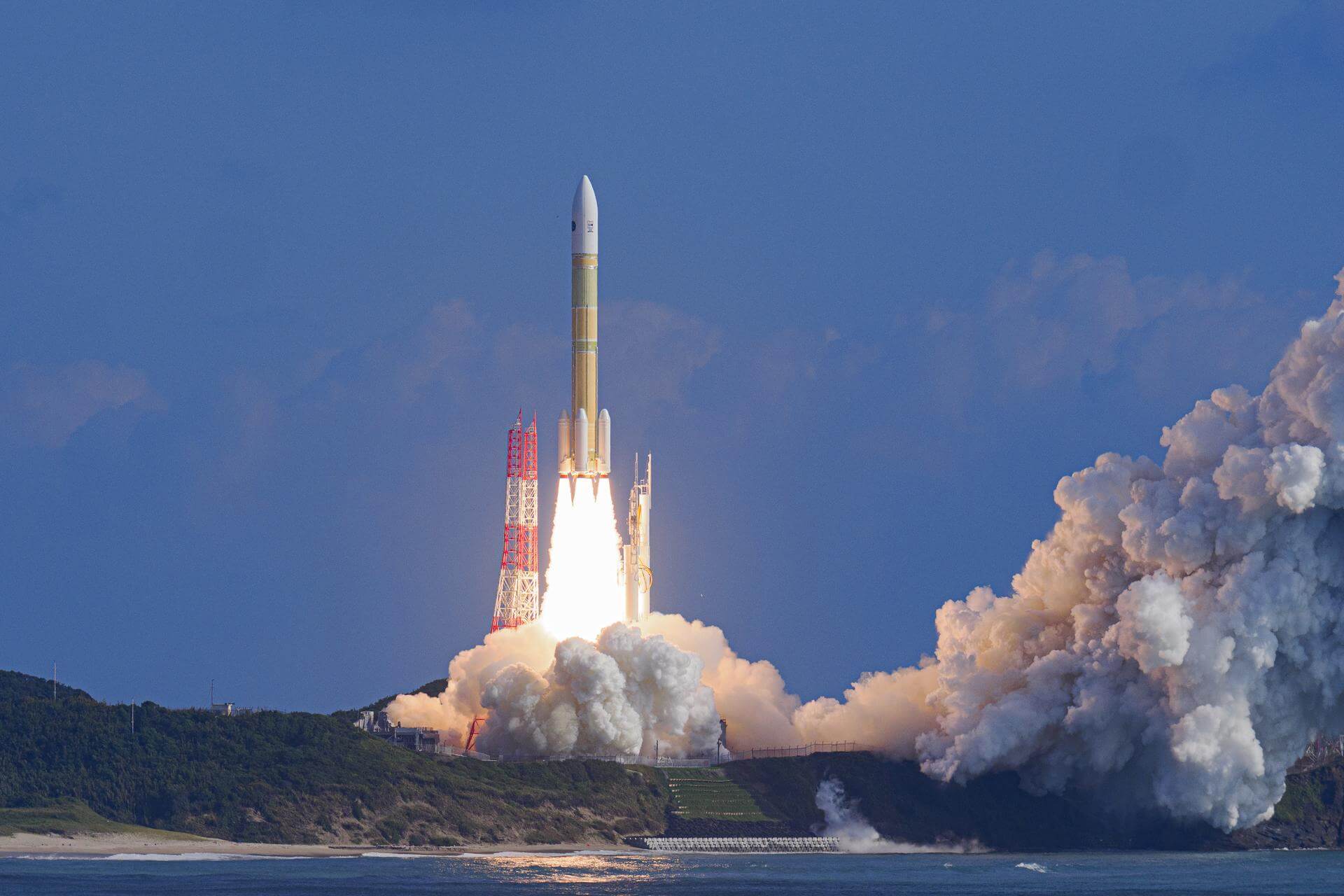
Mission image · Mitsubishi Heavy Industries
Mission overview
MMX is a Japanese scientific mission to land on Phobos, one of the two moons of Mars, to collect samples before bringing them back to Earth. The mission includes a small French/German rover to explore the surface of Phobos.
- Mission
- Martian Moon eXplorer (MMX)
- Mission type
- Planetary Science
- Provider
- Mitsubishi Heavy Industries
- Target orbit
- Mars Orbit
Timeline
Scheduled event sequence from Launch Library 2. These are planned milestones, not confirmed telemetry. Events remain unconfirmed until a verified source reports them.
Liftoff
19:41 UTCFirst upwards movement of the rocket
SCHEDULED
Boosters Separation
19:42 UTCSeparation of the side boosters
SCHEDULED
Boosters Separation
19:43 UTCSeparation of the side boosters
SCHEDULED
Fairing Separation
19:44 UTCSeparation of the payload fairing
SCHEDULED
MECO
19:45 UTCCut-off of the main engine
SCHEDULED
Stage 2 Separation
19:46 UTCSeparation of the second stage from the first
SCHEDULED
SES-1
19:46 UTCFirst start of the second engine
SCHEDULED
SECO-1
19:51 UTCFirst cut-off of the second engine
SCHEDULED
SES-2
20:45 UTCSecond start of the second engine
SCHEDULED
SECO-2
20:51 UTCSecond cut-off of the second engine
SCHEDULED
Payload Separation
20:52 UTCFinal deployment of the payload from the rocket
SCHEDULED
Mission intelligence
Explore connectionsMission activity
Listening for verified changes
Activity appears when ORBITAL observes a change between source records. No historical events are invented.
Read source update
NET October 20.
NET October.
Delayed to 2026 launch window due to H3 launch vehicle unavailability.
Schedule history
No changes recorded
Changes are recorded when ORBITAL retrieves data. The detection time may differ from the time the source changed its information.
Rocket
H3-24Mitsubishi Heavy Industries · JapanThe H3 Launch Vehicle is an expendable launch system in development in Japan. Each H3 booster configuration has a two-digit and a letter designation that indicates the features of that configuration. The first digit represents the number of LE-9 engines on the main stage, either "2" or "3". The second digit indicates the number of SRB-3 solid rocket boosters attached to the base of the rocket, and can be "0", "2" or "4". All layouts of solid boosters are symmetrical. The letter in the end shows the length of the payload fairing, either short "S" or long "L". For example, an H3-24L has two engines, four solid rocket boosters, and a long fairing, whereas an H3-30S has three engines, no solid rocket boosters, and a short fairing.
Payload
Martian Moon eXplorer (MMX)
Payload details are described in the mission overview. No independently structured payload manifest or payload mass has been provided by the source.
Target orbit
SCHEMATIC · NOT A FLIGHT TRAJECTORY
- Orbit
- Mars Orbit
- Classification
- Mars
Launch site
Yoshinobu Launch Complex LP-2
Tanegashima Space Center, Japan
- Latitude
- 30.40094°
- Longitude
- 130.97564°
- Country
- Japan
- Time zone
- Asia/Tokyo
Live & mission coverage
No verified official livestream has been announced. Check mission sources for coverage updates.
Sources
Source links and confidence are preserved with each mission. Official updates take priority when verified.
Launch Library 2high · P80
ll.thespacedevs.com · Updated Aug 20, 2026 21:04 UTCOfficial mission updatehigh · P100
www.jaxa.jp · Updated Aug 20, 2026 21:04 UTCMission referencemedium · P60
news.web.nhk · Updated Aug 20, 2026 21:04 UTCMission referencemedium · P60
arstechnica.com · Updated Aug 20, 2026 21:04 UTCMission referencemedium · P60
www8.cao.go.jp · Updated Aug 20, 2026 21:04 UTCMission photographs are provided by the original sources. Their rights remain with their creators; consult the source before reusing an image.