Launch success.
SpaceX / MISSION BRIEFING
NROL-95
Falcon 9 Block 5 · Government/Top Secret
Success
LAUNCH TIMEMISSION COMPLETETiming is subject to mission updates
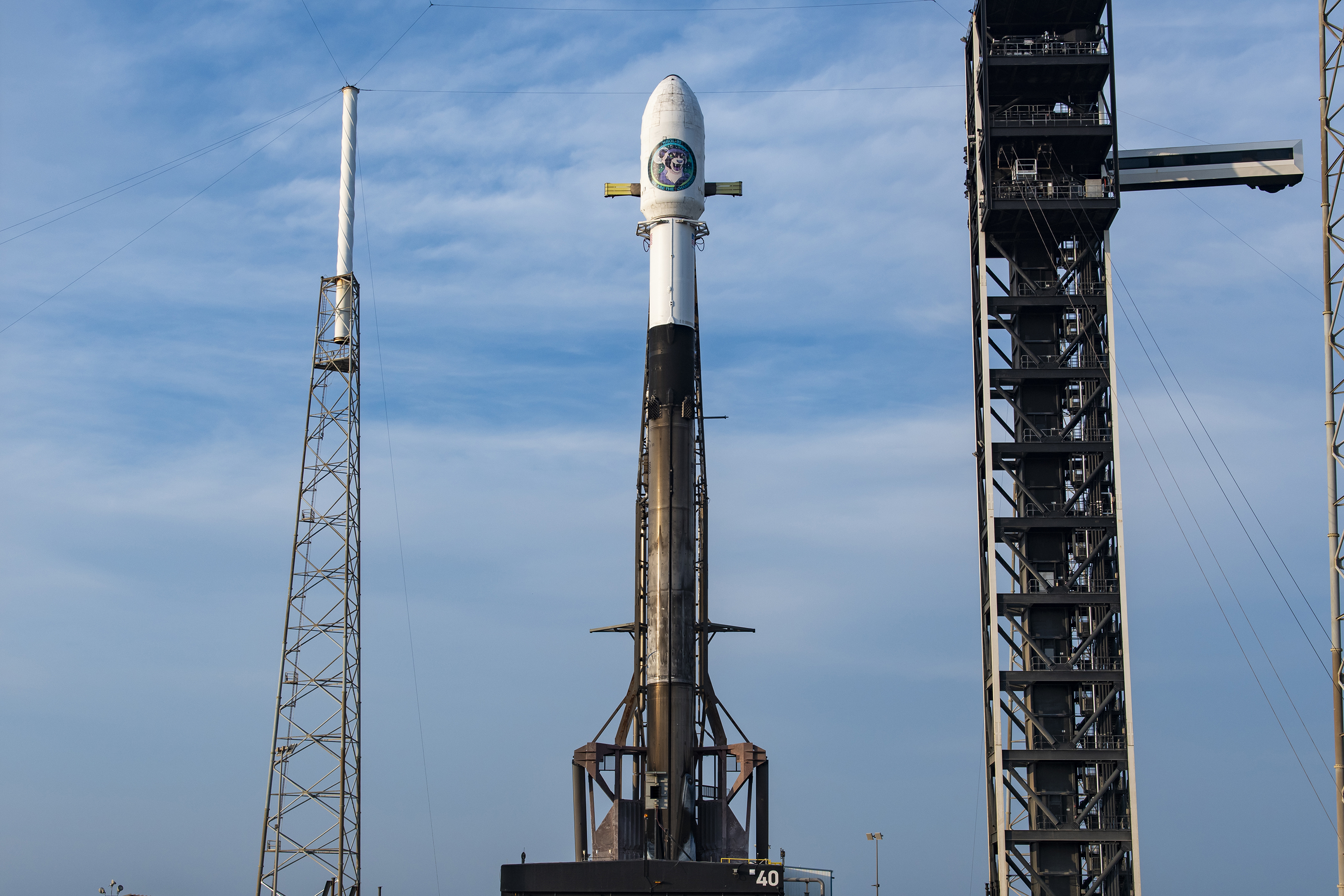
Mission image · SpaceX

Mission overview
Classified payload for the US National Reconnaissance Office.
- Mission
- NROL-95
- Mission type
- Government/Top Secret
- Provider
- SpaceX
- Target orbit
- Low Earth Orbit
Timeline
Scheduled event sequence from Launch Library 2. These are planned milestones, not confirmed telemetry. Events remain unconfirmed until a verified source reports them.
GO for Prop Load
06:32 UTCLaunch director verifies go for propellant load
SCHEDULED
Stage 1 LOX Load
06:35 UTCStart of liquid oxygen loading in the first stage
SCHEDULED
Prop Load
06:35 UTCStart of propelland loading
SCHEDULED
Stage 2 LOX Load
06:54 UTCStart of liquid oxygen loading in the second stage
SCHEDULED
Engine Chill
07:03 UTCStart of engine chilling
SCHEDULED
Tank Press
07:09 UTCFuel tanks are pressurized to flight levels
SCHEDULED
Startup
07:09 UTCThe onboard computer takes control over the countdown and runs last checks
SCHEDULED
GO for Launch
07:09 UTCLaunch director verifies go for launch
SCHEDULED
Ignition
07:10 UTCStart of the engine ignition sequence
SCHEDULED
Liftoff
07:10 UTCFirst upwards movement of the rocket
SCHEDULED
Max-Q
07:11 UTCMaximum dynamic pressure
SCHEDULED
MECO
07:12 UTCCut-off of the main engine
SCHEDULED
Stage 2 Separation
07:12 UTCSeparation of the second stage from the first
SCHEDULED
SES-1
07:12 UTCFirst start of the second engine
SCHEDULED
Booster Boostback Burn Startup
07:12 UTCStart of the booster boostback burn
SCHEDULED
Fairing Separation
07:13 UTCSeparation of the payload fairing
SCHEDULED
Booster Boostback Burn Shutdown
07:13 UTCEnd of the booster boostback burn
SCHEDULED
Entry Burn Startup
07:17 UTCStart of the atmospheric entry burn
SCHEDULED
Entry Burn Shutdown
07:17 UTCEnd of the atmospheric entry burn
SCHEDULED
Stage 1 Landing Burn
07:18 UTCStart of the first stage landing burn
SCHEDULED
SECO-1
07:18 UTCFirst cut-off of the second engine
SCHEDULED
Stage 1 Landing
07:18 UTCLanding of the first stage
SCHEDULED
Mission intelligence
Explore connectionsFlight hardware
Mission activity
Listening for verified changes
Activity appears when ORBITAL observes a change between source records. No historical events are invented.
Read source update
Liftoff!
Unofficial Re-stream by SPACE AFFAIRS has started
Now targeting Jul 30 at 07:10 UTC
Updated launch weather, 70% GO.
Now targeting Jul 30 at 07:09 UTC
GO for launch.
Added launch.
Schedule history
No changes recorded
Changes are recorded when ORBITAL retrieves data. The detection time may differ from the time the source changed its information.
Rocket
Falcon 9 Block 5SpaceX · United StatesFalcon 9 is a two-stage rocket designed and manufactured by SpaceX for the reliable and safe transport of satellites and the Dragon spacecraft into orbit. The Block 5 variant is the fifth major interval aimed at improving upon the ability for rapid reusability.
Payload
NROL-95
Payload details are described in the mission overview. No independently structured payload manifest or payload mass has been provided by the source.
Target orbit
SCHEMATIC · NOT A FLIGHT TRAJECTORY
- Orbit
- Low Earth Orbit
- Classification
- LEO
Launch site
Space Launch Complex 40
Cape Canaveral SFS, FL, USA
- Latitude
- 28.56194°
- Longitude
- -80.57736°
- Country
- United States
- Time zone
- America/New_York
Live & mission coverage
Official mission broadcast. Stream availability is controlled by the provider.
Sources
Source links and confidence are preserved with each mission. Official updates take priority when verified.
Launch Library 2high · P80
ll.thespacedevs.com · Updated Sep 12, 2026 22:02 UTCOfficial mission updatehigh · P100
www.spacex.com · Updated Sep 12, 2026 22:02 UTCMission referencemedium · P60
x.com · Updated Sep 12, 2026 22:02 UTCMission referencemedium · P60
www.youtube.com · Updated Sep 12, 2026 22:02 UTCMission referencemedium · P60
45thweathersquadron.nebula.spaceforce.mil · Updated Sep 12, 2026 22:02 UTCMission referencemedium · P60
www.fly.faa.gov · Updated Sep 12, 2026 22:02 UTCMission photographs are provided by the original sources. Their rights remain with their creators; consult the source before reusing an image.