Launch success.
China Aerospace Science and Technology Corporation / MISSION BRIEFING
Demo Flight
Long March 10B · Test Flight
Success
LAUNCH TIMEMISSION COMPLETETiming is subject to mission updates
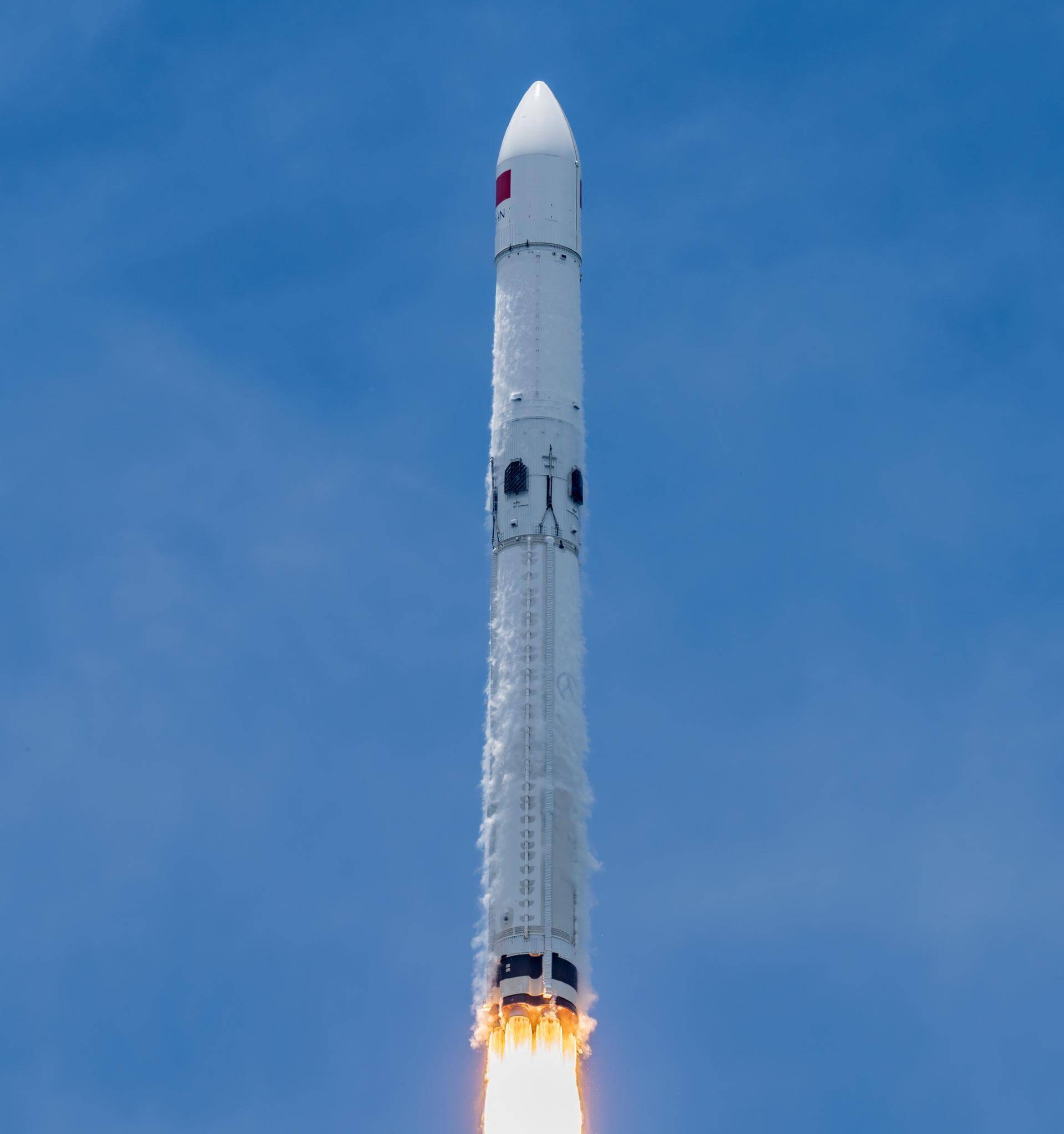
Mission image · CASC
Mission overview
First launch of the Long March 10B rocket and first ever successful rocket booster recovery of a Chinese launch vehicle. This launch also deployed a SatNet LEO constellation test satellite named Chuangxin-26 (CX-26) to LEO.
- Mission
- Demo Flight
- Mission type
- Test Flight
- Target orbit
- Low Earth Orbit
Timeline
Scheduled event sequence from Launch Library 2. These are planned milestones, not confirmed telemetry. Events remain unconfirmed until a verified source reports them.
A verified event timeline has not been published for this mission.
Mission intelligence
Explore connectionsFlight hardware
Mission activity
Listening for verified changes
Activity appears when ORBITAL observes a change between source records. No historical events are invented.
Read source update
Liftoff.
Adjusted T-0 per local reports.
New launch window per new NOTAMs.
Refined launch window.
NET July 10 per NOTAMs; assignment of this particular launch to the listed launch window is uncertain.
Rumored to be launching NET July.
NET May.
NET last days of April, to be confirmed.
Added launch.
Schedule history
No changes recorded
Changes are recorded when ORBITAL retrieves data. The detection time may differ from the time the source changed its information.
Rocket
Long March 10BChina Aerospace Science and Technology Corporation · ChinaThe Long March 10B is a reusable launch vehicle based on the 1st stage of the Long March 10A, in turn derived from a single 1st stage core of the Long March 10, with 7 YF-100 series kerosene/liquid oxygen staged-combustion cycle engines on the 1st stage. Like the Long March 10A, the 10B’s 1st stage is designed to be recovered downrange by a recovery barge equipped with an arrestor net and support frame, with the 1st stage landing on the net’s cables using its grid fins. The 2nd stage, however, uses a single YF-219 gas generator cycle methane/liquid oxygen engine with 140 tonnes of thrust. The Long March 10B became China's first orbital launch vehicle with its first stage booster being recovered, during its first launch on 10 July 2026.
Payload
Demo Flight
Payload details are described in the mission overview. No independently structured payload manifest or payload mass has been provided by the source.
Target orbit
SCHEMATIC · NOT A FLIGHT TRAJECTORY
- Orbit
- Low Earth Orbit
- Classification
- LEO
Launch site
Commercial LC-2
Wenchang Space Launch Site, People's Republic of China
- Latitude
- 19.59755°
- Longitude
- 110.93648°
- Country
- China
- Time zone
- Asia/Shanghai
Live & mission coverage
No verified official livestream has been announced. Check mission sources for coverage updates.
Independent coverage (1)
Sources
Source links and confidence are preserved with each mission. Official updates take priority when verified.
Launch Library 2high · P80
ll.thespacedevs.com · Updated Sep 12, 2026 19:05 UTCMission referencemedium · P60
m.weibo.cn · Updated Sep 12, 2026 19:05 UTCMission referencemedium · P60
www.youtube.com · Updated Sep 12, 2026 19:05 UTCMission referencemedium · P60
x.com · Updated Sep 12, 2026 19:05 UTCMission referencemedium · P60
forum.nasaspaceflight.com · Updated Sep 12, 2026 19:05 UTCMission referencemedium · P60
forum.nasaspaceflight.com · Updated Sep 12, 2026 19:05 UTCMission referencemedium · P60
forum.nasaspaceflight.com · Updated Sep 12, 2026 19:05 UTCMission referencemedium · P60
x.com · Updated Sep 12, 2026 19:05 UTCMission referencemedium · P60
x.com · Updated Sep 12, 2026 19:05 UTCMission photographs are provided by the original sources. Their rights remain with their creators; consult the source before reusing an image.