Launch success with satellite in communication and solar arrays deployed.
Indian Space Research Organization / MISSION BRIEFING
GISAT-1A (EOS-05)
GSLV Mk. II · Earth Science
Success
LAUNCH TIMEMISSION COMPLETETiming is subject to mission updates
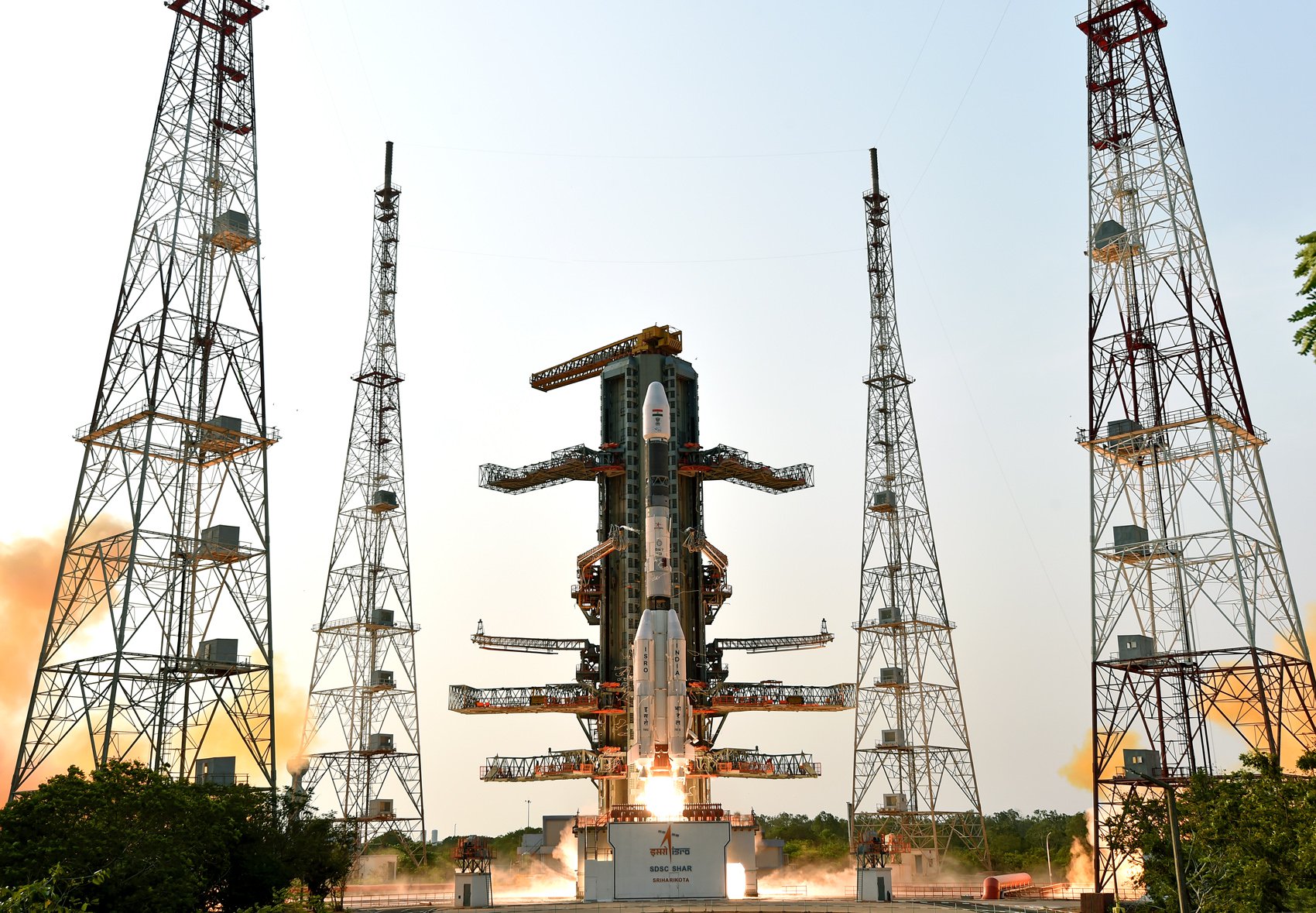
Mission image · https://ll.thespacedevs.com/2.3.0/launches/17d0ec68-f466-4916-9dc5-16123eda6484/
Mission overview
GISAT-1A (GEO Imaging Satellite) is an Indian earth observing satellite operating from geostationary orbit to facilitate continuous observation of Indian sub-continent, quick monitoring of natural hazards and disaster. EOS-05/GISAT-1A will replace EOS-03/GISAT-1 lost in launch failure in 2021.
- Mission
- GISAT-1A (EOS-05)
- Mission type
- Earth Science
- Target orbit
- Geostationary Transfer Orbit
Timeline
Scheduled event sequence from Launch Library 2. These are planned milestones, not confirmed telemetry. Events remain unconfirmed until a verified source reports them.
A verified event timeline has not been published for this mission.
Mission intelligence
Explore connectionsMission activity
Listening for verified changes
Activity appears when ORBITAL observes a change between source records. No historical events are invented.
Read source update
Spacecraft separation.
Liftoff.
Official Webcast by ISRO Official has started
Updated T-0.
NET September 3 per new NOTAMs, TBC.
NET 1st week of September.
NET Q3.
NET July.
NET June 10.
NET early June.
Delayed to end of May.
Rescheduled for NET May 21, TBC.
Reverted back to NET March with cancellation of NOTAMs.
NET March 6 per new NOTAMs.
NET February 20 per NOTAMs.
NET Q1 2026.
Targeting March 2024
Schedule history
No changes recorded
Changes are recorded when ORBITAL retrieves data. The detection time may differ from the time the source changed its information.
Rocket
GSLV Mk. IIIndian Space Research Organization · IndiaGeosynchronous Satellite Launch Vehicle Mark II (GSLV Mk II) is the largest launch vehicle developed by India, which is currently in operation. This fourth generation launch vehicle is a three stage vehicle with four liquid strap-ons. The indigenously developed cryogenic Upper Stage (CUS), which is flight proven, forms the third stage of GSLV Mk II. From January 2014, the vehicle has achieved four consecutive successes.
Payload
GISAT-1A (EOS-05)
Payload details are described in the mission overview. No independently structured payload manifest or payload mass has been provided by the source.
Target orbit
SCHEMATIC · NOT A FLIGHT TRAJECTORY
- Orbit
- Geostationary Transfer Orbit
- Classification
- GTO
Launch site
Satish Dhawan Space Centre Second Launch Pad
Satish Dhawan Space Centre, India
- Latitude
- 13.71990°
- Longitude
- 80.23040°
- Country
- India
- Time zone
- Asia/Kolkata
Live & mission coverage
Official mission broadcast. Stream availability is controlled by the provider.
Sources
Source links and confidence are preserved with each mission. Official updates take priority when verified.
Launch Library 2high · P80
ll.thespacedevs.com · Updated Sep 13, 2026 03:41 UTCOfficial mission updatehigh · P100
www.isro.gov.in · Updated Sep 13, 2026 03:41 UTCMission referencemedium · P60
www.youtube.com · Updated Sep 13, 2026 03:41 UTCMission referencemedium · P60
www.reddit.com · Updated Sep 13, 2026 03:41 UTCMission referencemedium · P60
forum.nasaspaceflight.com · Updated Sep 13, 2026 03:41 UTCMission referencemedium · P60
www.manoramaonline.com · Updated Sep 13, 2026 03:41 UTCMission referencemedium · P60
timesofindia.indiatimes.com · Updated Sep 13, 2026 03:41 UTCMission referencemedium · P60
www.thehindu.com · Updated Sep 13, 2026 03:41 UTCMission referencemedium · P60
www.sakshi.com · Updated Sep 13, 2026 03:41 UTCMission photographs are provided by the original sources. Their rights remain with their creators; consult the source before reusing an image.